
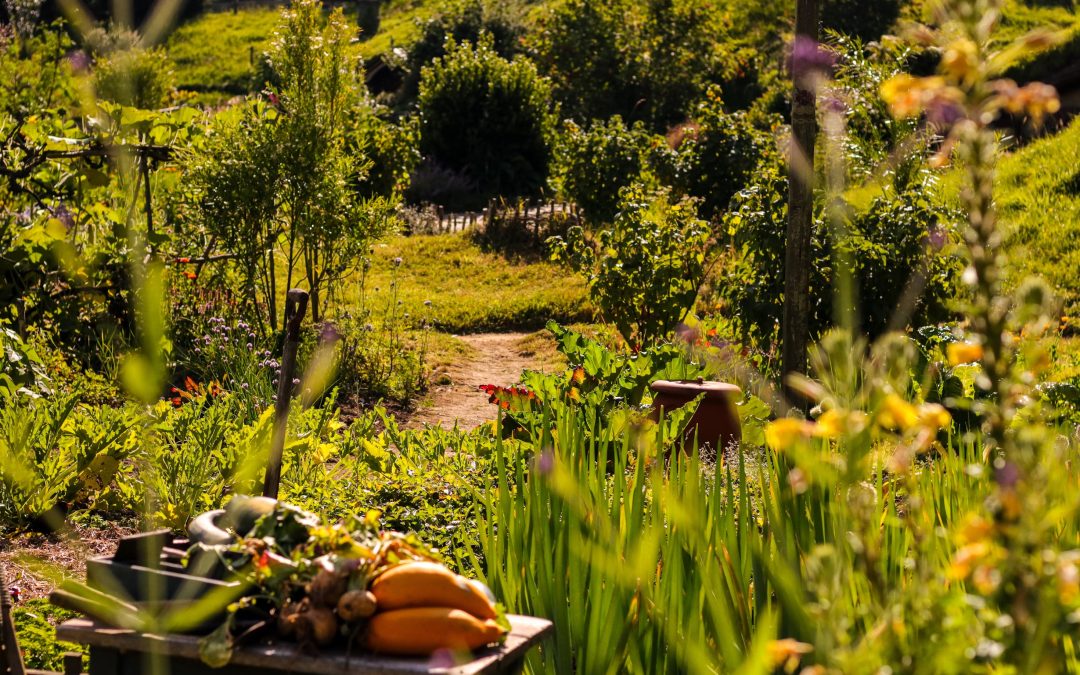
Urban farming and community gardens do more than grow food. They help neighbors share knowledge, reduce waste, build trust, and create stronger local support systems.
Across cities, people are turning community gardens, patios, balcony containers, school gardens, and small urban farms into places that produce fresh food and real connection. A garden can help feed a household, but it can also do something bigger. It can bring people together around a shared need, a shared place, and a shared sense of care for one another.
That matters in any season, but especially when food costs rise, budgets feel tight, or local families are looking for practical ways to stay supported and connected.
Last updated: June 2, 2026
Why urban farming matters
Urban farming helps bring food production closer to where people live. That alone can make a difference. Fresh produce grown nearby can be easier to access, easier to share, and more connected to the people who will actually use it.
But the value of urban farming is not just about food. It is also about confidence, knowledge, and local resilience.
When people learn how to grow herbs, greens, tomatoes, peppers, or other crops in small spaces, they gain skills they can keep using. When neighbors swap advice, seeds, tools, or extra produce, they create stronger local networks. When gardens become places where people gather regularly, they can also become spaces of trust, belonging, and mutual support.
What community gardens make possible
Community gardens are often one of the clearest examples of local abundance in action.
A shared garden can help neighbors:
- grow food even if they do not have land of their own
- learn from more experienced gardeners
- share seeds, seedlings, tools, and harvests
- donate extra produce to others nearby
- create a consistent place for connection and collaboration
For many people, a community garden is not just where food is grown. It is where relationships are built.
People meet while watering, weeding, mulching, harvesting, or trading tips. They notice who needs help. They celebrate what is growing well. They share extra plants, extra produce, and extra knowledge. Over time, that kind of repeated local interaction strengthens a neighborhood in ways that are hard to replicate elsewhere.
Growing food can grow confidence too
There is something powerful about seeing food grow because of your own effort and care.
For beginners, even a few successful herbs or vegetables can create momentum. For experienced growers, sharing what they know can turn individual knowledge into community value. Gardens help people build practical confidence, not just in growing food, but in participating more actively in local life.
That confidence matters because it often spreads. One person starts composting. Another tries container gardening. A neighbor shares seedlings. Someone else offers extra tools. What begins as a small gardening effort can become a more connected local ecosystem of sharing and support.
Less waste, more local usefulness
Urban farming and community gardens can also help communities make better use of what they already have.
Extra zucchini does not have to go unused. Surplus herbs can be shared. Seed packets do not have to sit half-finished in a drawer. Tools do not need to be bought by every household if some can be shared or borrowed locally.
The more neighbors can keep food, supplies, and growing knowledge in motion, the less goes to waste and the more useful each resource becomes. That is one of the most practical benefits of local food sharing. It turns abundance, even small-scale abundance, into something more visible and more accessible.
How this connects to Plentifully
At Plentifully, we care about making local sharing easier to organize and easier to sustain.
We are building first in the Twin Cities, starting with Minneapolis and St. Paul, with a focus on helping growers, gardeners, and neighbors share produce, seeds, tools, and know-how close to home.
Community gardens and urban farming already create so much local value. Plentifully is being built to support more of that value by helping neighbors list what they have to offer, respond to relevant swap listings, and request or claim items already posted as donations. That can include swaps, donations, tool-sharing, and other practical forms of local exchange.
Why this matters in the Twin Cities
The Twin Cities already have strong local food communities, community gardens, urban growers, and neighbors who care about sharing more of what they grow. That makes Minneapolis and St. Paul a meaningful place to build with real local participation from the start.
The goal is not to replace what communities already do well. It is to support it. When local growers and neighbors have simple ways to connect, coordinate, and share, it becomes easier to keep food and resources circulating where they are most useful.
That can mean:
- helping a gardener share surplus produce
- making it easier for neighbors to find seeds or tools nearby
- supporting donation-friendly sharing when a swap is not needed
- helping local knowledge move more freely between growers and community members
A stronger neighborhood can start with something small
A few herbs on a porch. A raised bed in a community garden. A basket of extra tomatoes. A conversation between neighbors about what is growing well and what is needed next.
Urban farming and community gardens remind us that local abundance does not always start big. Often, it starts with small acts of care that become easier to share over time.
That is part of what makes these spaces so powerful. They help people feed one another, learn from one another, and stay more connected to the place they live.
Join Plentifully Early Access
Plentifully Early Access is now open. Create your account to start sharing, swapping, or donating produce, seeds, tools, supplies, and growing knowledge with neighbors.
We are starting in the Twin Cities and building with local growers, gardeners, community gardens, and neighbors who want to make local sharing easier.